
Predetermined. Unreviewed. In a Fire Zone. And We’re Supposed to Accept It.
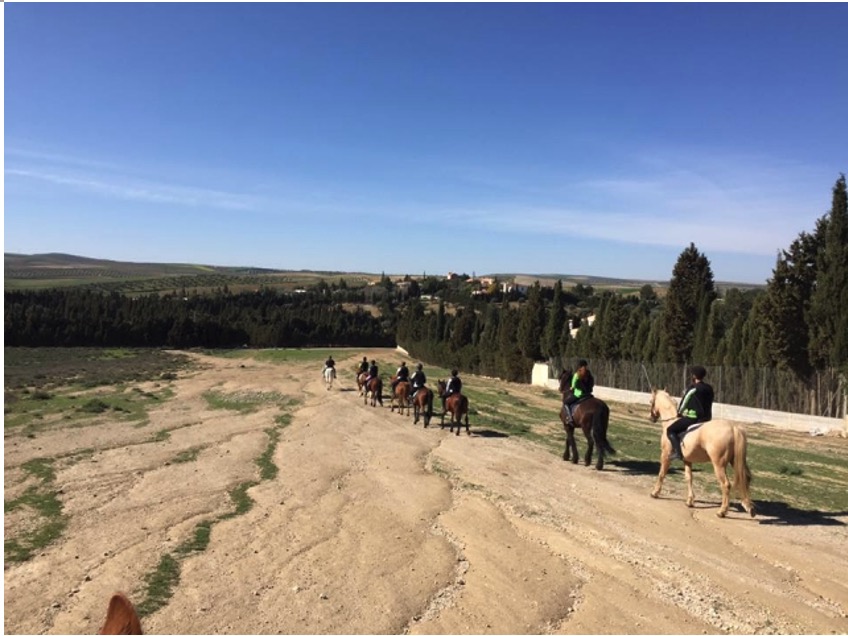
INSIDER TAKE - In Granada Hills, a nearly 100-unit assisted living and memory care facility is being pushed through on land zoned A1 for equestrian and low-density use—inside a designated Very High Fire Hazard Severity Zone, along a narrow evacuation corridor, and near schools.
Under any normal planning framework, a project like this would require full environmental review.
It didn’t.
After years of processing under the California Environmental Quality Act (CEQA), including an Environmental Impact Report (EIR) already underway, the project was abruptly converted to a statutory exemption under AB 130—eliminating environmental review entirely.
No clear public record explains when this decision was made, who made it, or why the community was never informed in advance.
That alone should concern anyone paying attention.
We Know What Fire Risk Looks Like
This is not theoretical.
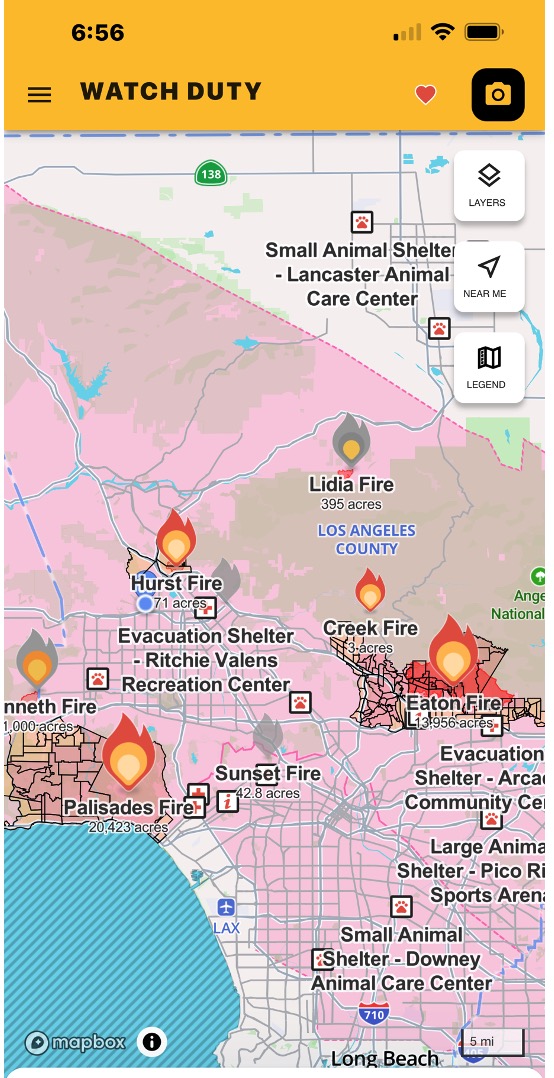
Last year, fires surrounded our community. We lost power for days. The air was unbreathable. Many homeowners have since had their fire insurance canceled or premiums doubled.
Now, in that same environment, a dense assisted living facility—housing elderly and memory care residents—is being placed on a site dependent on a narrow roadway that functions as the primary evacuation route for thousands.
If this is considered acceptable planning, then the definition of “public safety” has fundamentally changed.
A Public Process That Wasn’t Public
The March 10 City Planning hearing was noticed only to residents within 300 feet of the project—about three weeks in advance.
The broader community found out the way people always do when information isn’t properly shared: through word of mouth, late and incomplete.
At the hearing, public comment was closed.
Then it was reopened—but only to allow a council office representative to speak.
He stated that community sentiment had changed, citing roughly ten letters of support.
There was no opportunity for rebuttal.
Meanwhile, nearly 200 residents were present—most in opposition.
Two weeks later, on March 24, the Granada Hills North Neighborhood Council voted again. The result: unanimous denial. Over 100 residents attended despite minimal time to organize.
Community sentiment had not changed.
The record simply didn’t reflect it.
Was the Outcome Already Decided?
At the hearing, the applicant stated on the record that the AB 130 exemption determination had already been made by City Planning and the City Attorney.
Not proposed. Not under review. Already decided.
If that is accurate, then the obvious question is:
What exactly was the purpose of the hearing?
A key document formalizing this exemption was never publicly posted and was only provided to two opposition members less than 24 hours before the hearing.
That is not a functioning public process.
That is a formality.
The Room Where It Happens
There is another layer that should not be ignored.
Several speakers supporting the project appear affiliated with the Valley Industry and Commerce Association (VICA), a private, membership-based organization where developers, lobbyists, elected officials, and city planning staff engage on land use issues.
Publicly available information indicates that individuals associated with the applicant also participate within this organization and its land use-related activities.
In addition, publicly available campaign finance records indicate that individuals associated with the development team made contributions to the relevant Council office while project entitlements were under consideration. While such contributions may be lawful, their timing—coinciding with a shift away from environmental review—raises further questions about how and where this outcome was shaped.
Individually, none of this is unusual.
Collectively, it raises a serious question.
When project applicants, advocacy organizations, and public decision-makers operate within the same overlapping environment—and a project emerges with a predetermined exemption that bypasses environmental review—the public is left to wonder:
Are decisions being made in the hearing room?
Or somewhere else entirely?
This Is the Precedent
This is not just about one project in Granada Hills.
If a discretionary project in a high fire hazard zone—requiring a Conditional Use Permit—can be reclassified as “residential housing” and stripped of environmental review mid-process, then no community protections are truly fixed.
They are flexible.
And flexibility, in this context, does not favor residents.
It favors outcomes.
What is happening here is not hidden.
It is not subtle.
It is happening in plain sight—and it is setting a precedent that will reach far beyond one neighborhood.
(Eva Amar serves as the Community Coordinator for Granada Highlands, working to connect residents, support local initiatives, and strengthen neighborhood engagement. She is dedicated to fostering collaboration and improving quality of life across the community.)