Comments
PLANNING WATCH - How did greater Los Angeles go from a post-WWII land of milk and honey to a metropolitan region in free fall. It is not a pretty picture, and it is hard to see how hosting two global sports events, the World Cup in 2026 and the Olympics in 2028, can camouflage the region’s decline. For example, according to the California State Department of Finance, in 2025 LA County’s population was 9,854,000, but will shrink to 8,587,000 by 2070.
Given the area’s prospects for massive earthquakes and wildfires, plus the country’s likelihood of wars, deep recessions, and long-term economic decline, the Department of Finance forecasts may be optimistic. For example, the price of housing in the Los Angeles area continues to rise faster than incomes because, in part. landlords use software, like RealPage, to squeeze larger profits from rental apartments and houses.
What are the long-term consequences of these trends?
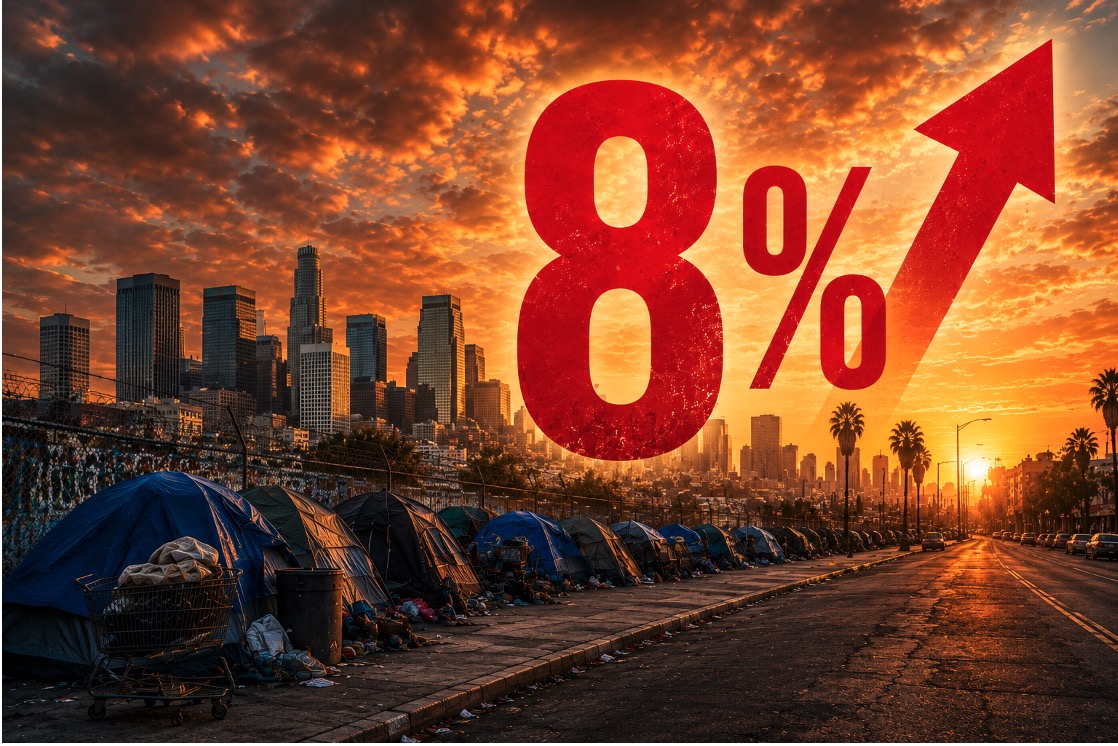
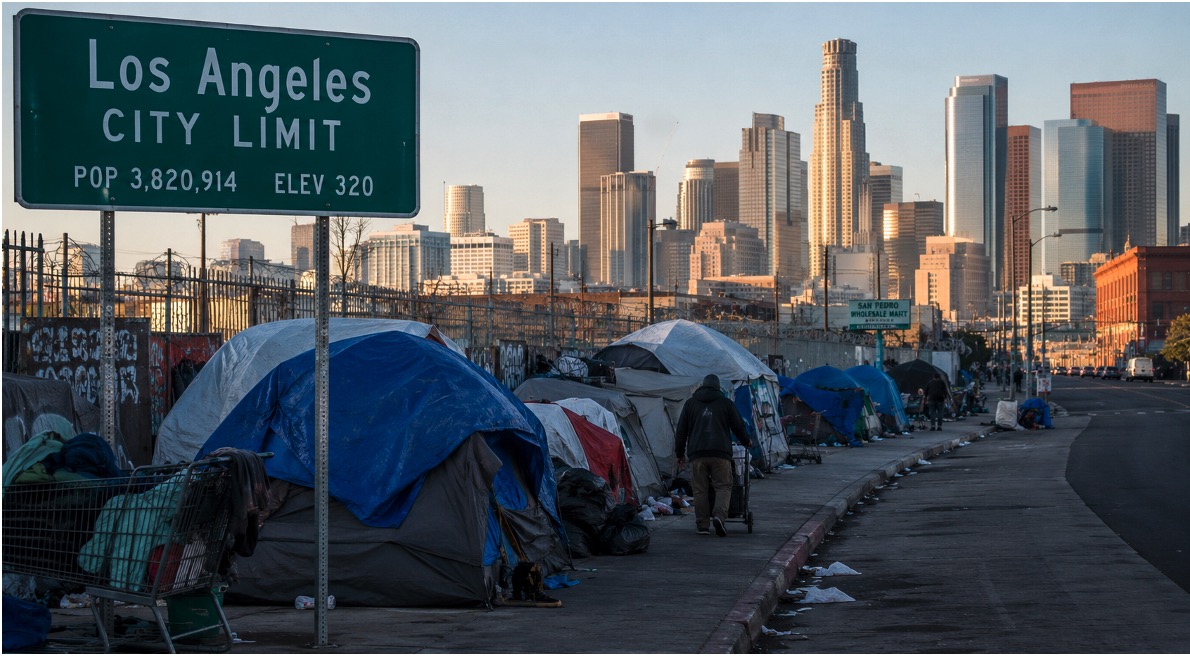
1. The main strategy of the State legislature and local City Halls is to address homelessness and overcrowding by making it easier for developers to build overpriced apartments. Many of these new units will, however, remain unrented because of their high rents. This, in turn, causes an increase in homelessness and overcrowding. While nearly all of these people would love to move into the available new apartments, they can’t afford them. Instead they live in cars, overcrowded apartments, and garages. Some, unfortunately, end up on streets, and their numbers are rising, projected to reach 113,000 by 2028.
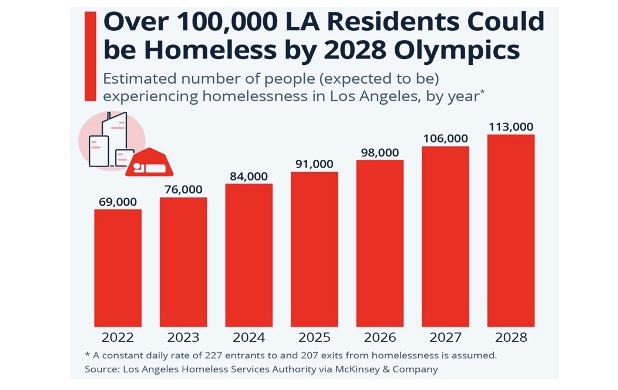
2. Loosening up local zoning codes to reduce homelessness and over-crowding does not work. For example, the California legislature passed legislation that permits three rental units on lots zoned for single-family homes. A second bill, SB 9, allows developers to buy and demolish single-family houses, divide the underlying parcel in two, then build a duplex on each half. As shown in the chart above, these gimmicks failed to reduce the number of homeless and overcrowded people in Los Angeles. Their numbers keep rising because the price of housing vastly exceeds wages. Their low incomes, not drug addiction and/or mental illness, explain the growth of homelessness and overcrowding. This evidence does not support the claim that homelessness and over-crowding is caused by a housing shortage, and that it can be alleviated by allowing apartments in areas zoned for single-family homes.
3. This argument is at the root of the housing crisis. Most of the homeless and overcrowded simply don’t have enough money to move into vacant apartments. This also explains why homelessness keeps rising despite new California legislation that allows developers to build apartments in areas zoned for single-family homes. There are many vacant apartments, but too few are low-priced enough for the homeless and overcrowded to afford them.
4. This is because of a bipartisan Congressional and White House agreement in the 1970’s and 1980’s to scrap new public housing. My estimate is that at least a million public housing units were therefore not built, which is more than the 710,000 homeless people in the United States. The alternative remedy to homelessness and overcrowding, local rezoning, does not address the real cause of the housing crisis, low incomes for much of the US population over the past 50 years.
What a shame that both major electoral parties are so devoted to this false solution to homelessness and overcrowding that it makes the housing crisis worse.
(Dick Platkin ([email protected]) is a retired LA city planner. He reports on local planning issues and serves on the board of United Neighborhoods for Los Angeles. Previous columns are available at the CityWatchLA archives.)