
Comments
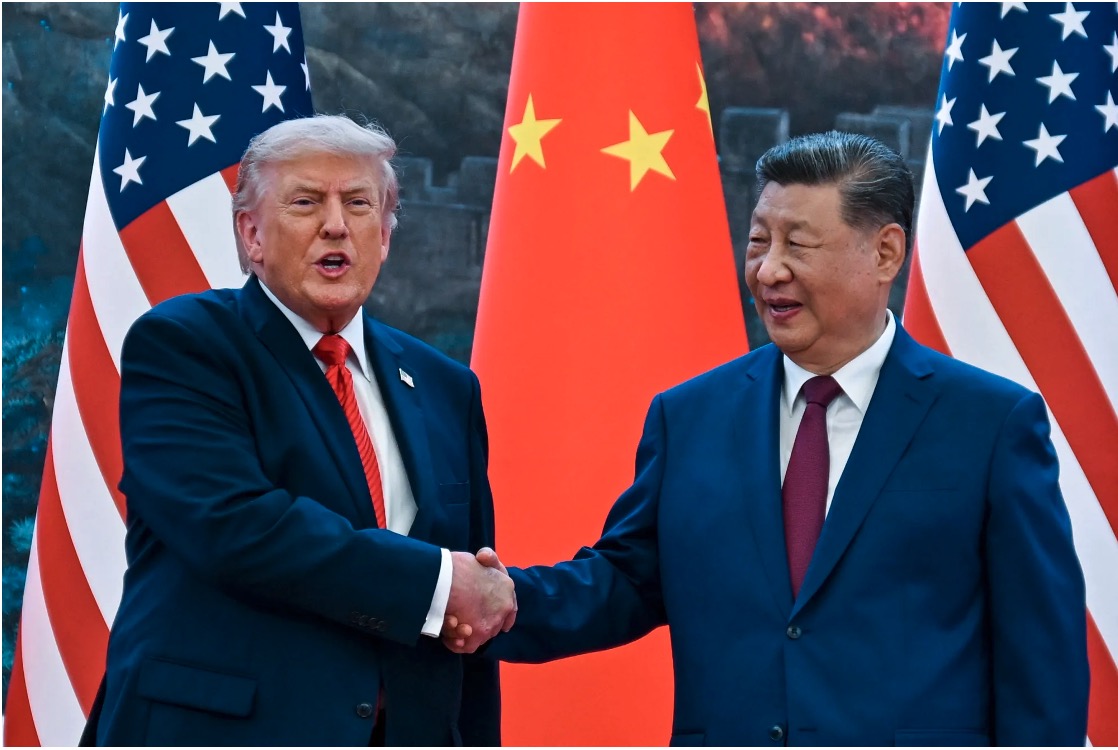
NICK’S VIEW - At a recent meeting in Beijing, President Trump received a strategic cautioning from Chinese President Xi Jinping, and it was a weighty Greek analogy. Xi urged both powers to avoid the “Thucydides Trap” and not repeat the fate of Athens and Sparta.
This represented more than a diplomatic gesture; it constituted a significant test of strategic intent. In short, the great powers must avoid repeating historical tragedies. When a rising power challenges a ruling one, the structural stress often leads to war.
That is what Thucydides, the father of history, a 5th-century BCE Athenian historian and general, wrote in "The History of the Peloponnesian War" (431-404BC), across eight detailed books, considered one of the first written military histories. Sparta, a dominant power, felt threatened by Athens, a fast‑growing challenger. Fear, miscalculation, and escalating tensions resulted in a devastating 27-year war that Sparta finally won.
I doubt Trump and his advisors have read Thucydides.
The United States, the dominant power, can cause miscalculations and fears when dealing with China, the rising power. Diplomatically, Xi was telling Trump not to allow fear to drive his policies.
By so doing, Xi employed a shrewd rhetorical strategy. By invoking elevated historical themes, he enhanced Trump’s perceived role and presented cooperation as a more statesmanlike course. He knew that Trump responded positively to big historical ideas and adored being cast as a world-historical figure. Cooperation over conflict became a heroic choice.
And just like that, the conversation shifted from tactical disputes to strategic stability. By managing flashpoints like Taiwan, AI, trade, and military balance, conflict can be avoided, but it requires deliberate and diplomatic efforts.
The Thucydides Trap is a useful concept for understanding great-power anxiety. Harvard political scientist Graham Allison coined the term in a 2012 Financial Times opinion piece and popularized it in his 2017 book, "Destined for War: Can America and China Escape Thucydides' Trap?".
Today, however, many conflict-avoidance mechanisms have been erected and spiraling to open conflict by China and the US is not impossible, but more improbable. That is why I would prefer rephrasing the Thucydides Trap into the Thucydides Predicament. Of course, there are caveats.
Fears and threats do not have to emanate from the main players but from blocs whose interactions can destabilize relationships and create structural tensions. For example, North Korea’s wildcard behavior can unintentionally trigger a US–China crisis. Or the US national security establishment, the Pentagon and its intelligence community, can overreach and pursue a more advantageous arrangement.
Taiwan is the most dangerous flashpoint in US–China relations because it combines conflicting political, military, and legitimacy claims. China sees Taiwan as part of its territory and links reunification to national sovereignty and regime legitimacy. The US, under the Taiwan Relations Act, is committed to helping Taiwan defend itself and views the island as central to Indo-Pacific stability.
Then there are the economic and technological actors, the Silicon Valley and semiconductor industry. Export controls and tech bans have now become strategic weapons.
Whereas America has embarked in foreign adventurism, China has shown little interest for such exhibitions of power. China focuses on developing ties with allies, using trade, investment and diplomacy.
The Greek analogy can reduce US–China tensions only if both sides draw the right lesson from it. It recasts rivalry as a shared problem, heightens elite awareness of the risk of miscalculation, and discourages overreaction to ambiguous signals. In doing so, it encourages restraint rather than maximalism.
I am always surprised to see how classical Greek analogies are useful in our world today. They do not help us predict, but they do help us see patterns. These are conceptual shortcuts, a compact way to describe the rewards and consequences that shape how we allocate our efforts. More so, they remind us that power politics is ancient.
The modern world has benefited from Greek insights into power, psychology, institutions, and human behavior. Greece gave us both the first experiment in democracy and the first critique of it. Still, the present differs from the ancient world, so Greek history works best as a diagnostic lens rather than a template.
Remarkably, it is an amazing fact that Thucydides’ diagnostic tools found their way to China 2,500 years later.
(Nick Patsaouras is an electrical engineer, civic leader, and a longtime public advocate. He ran for Mayor in 1993 with a focus on rebuilding L.A. through transportation after the 1992 civil unrest. He has served on major public boards, including the Los Angeles Department of Water and Power, Metro, and the Board of Zoning Appeals, helping guide infrastructure and planning policy in Los Angeles. He is the author of the book "The Making of Modern Los Angeles.")