
Traci Park Declares War on ‘Van Lords’ Exploiting L.A.’s Homeless!
WESTSIDE - Los Angeles Councilwoman Traci Park (CD-11) has introduced legislation directing the City of Los Angeles to implement a new state directive aimed at "breaking the cycle that allows abandoned and dilapidated RV's to be resold and returned to City streets by so-called van lords."
Governor Gavin Newsom signed AB 647, authored by Assemblymember Mark González, expressly giving public agencies, including municipalities, within Los Angeles County authority to dispose of qualifying abandoned RVs valued at $4,000 or less rather than putting them back on the auction block.
In Los Angeles, a “van lord” generally refers to someone who owns or controls multiple vans, RVs, campers, or other vehicles that are used as residences and rents or leases them to people living in them.
It is essentially the vehicle equivalent of a “slumlord.”
Clark Brown, a Community Officer with the Venice Neighborhood Council has led numerous efforts locally to remove these unsighlty and in many cases dangerous vehicles from Washington Boulevard with the help and cooperation of LADOT, LAPD and CD-11 as he has made his case before the Parking, Transportation & Infrastructure Committee (PTIC) of the VNC.
A van lord may own a fleet of vans or RVs and rent them to unhoused or housing-insecure individuals. They charge weekly or monthly rent for sleeping/living space inside a vehicle and move these campers between streets, parking lots and neighborhoods to avoid parking enforcement that has residents most effected by this crisis both frustrated and concerned.
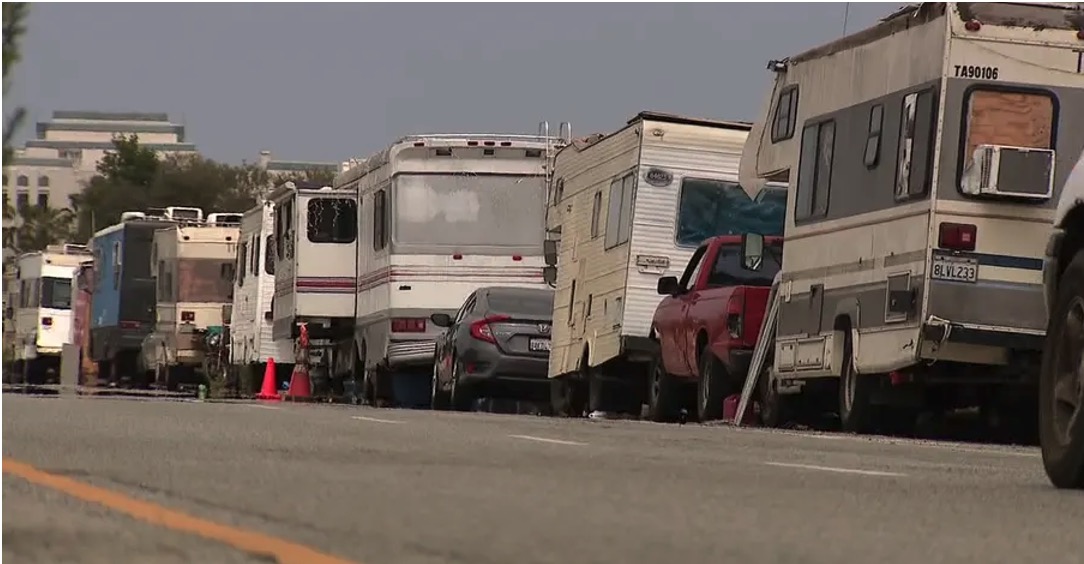
Van lords historically provide vehicles that are poorly maintained or lack proper registration, and take advantage of people who cannot qualify for conventional housing, and in many cases, operate illegally with no conventional lease or renter protections.
Most times these relationships are transacted on a cash basis.
The term van lord is particularly relevant to the Venice/Westside homelessness and RV crisis, where a distinction can be important, not every person living in an RV owns it. Many vehicles could be rented, shared, loaned, abandoned, or controlled by another individual.
If multiple RVs are being rented to people for habitation, the issue becomes more complicated than simply homeless people parking RVs. There can potentially be questions about ownership, who collects the fee, and how much is being charged? Are the vehicles registered or insured? And who is responsible for sanitation and maintenance?
Park's initiative is timely given the RV crisis here in Venice, particlarly on main arteries such as Washington Boulevard, Rose and Lincoln Boulevard. The Venice Neighborhood Council has tentatively scheduled a Town Hall for Wednesday, October 28th at the First Lutheran Church of Venice located at 815 Venice Blvd, with doors opening to the public at 6:00 PM.
Park is scheduled to participate as a panelist regarding her announced legislative priorities.
Park's enforcement proposal deals specifically with not just a symptom of homelessness, but now addressing a potentially illegal, underground vehicle-rental cottage industry in which van lords are profiting from people who have nowhere else to live!
In wake of the scheduled Town Hall, Park's proposal could provide new information if whether there is evidence that van lords operate in Venice and along Washington Boulevard, and what L.A. ordinances could be applied to erradicate the current RV crisis.
Park has pushed the City to crack down on vanlords who buy old, barely operable RVs for next to nothing, park them on public streets, and rent them out for profit to the most vulnerable of individuals.
Across the Westside, these junk vehicles have become in many cases drug dens and sources of fires, crime, human waste, and other serious public health and safety hazards – while the van lords profiting from them leave neighborhoods and taxpayers to deal with the quality-of-life consequences such as drug transactions and prostitution.
Adding to the frustration is that when vehicles are finally removed, the system allows this vicious cycle to repeat itself over and over again.
“This is a business model built on exploiting vulnerable people and our public streets,” said Park. “Van lords buy junk RVs for next to nothing, rent them out on our streets, and walk away while neighborhoods deal with fires, drugs, crime and the enormous public cost of cleaning it all up. Then we impound the vehicle, it gets sold at auction for pennies, and somebody puts it right back on the street. That cycle is about to end.”
According to a Park media statement, impounded vehicles valued at more than $500 generally must be sold at public auction. That means even dilapidated or inoperable RVs can be purchased for a fraction of their original value and returned to the public right-of-way. Park’s motion describes the process as an “RV to streets pipeline” that has strained City resources and repeatedly burdened those departments responsible for enforcement and impoundment.
Assemblymember González authored AB 630, establishing a process for qualifying abandoned RVs valued at $4,000 or less to be disposed of rather than resold. Los Angeles moved to implement the law, but the CD11 Coalition for Human Rights sued the City, arguing that the statute authorized Los Angeles County – but not the City of Los Angeles – to operate the program. A Superior Court judge agreed, preventing the City from moving forward.
Lawmakers went back to Sacramento and revised AB 647 that expressly extends that authority to public agencies within Los Angeles County, including the City of Los Angeles.
Park’s motion directs the City Administrative Officer, in coordination with LADOT, LAPD and the City Attorney, to report within 30 days with a plan to implement AB 647. This includes procedures for identifying, valuing and processing abandoned RVs under the new $4,000 threshold and identifying any necessary changes to City codes or contracts with Official Police Garages.
Los Angeles currently operates a CAO-led initiative to remove abandoned RVs from the public right-of-way. Park’s motion calls for building the new AB 647 authority into that existing operation, including consistent procedures for vehicle valuation, citations, required notices, authorization and disposal.
“We know what these junk RVs are doing to our neighborhoods, and we know people are making money off keeping them there,” Park said. “We finally have another tool to stop it. I'm not interested in wasting another day," offered Park, a Venice resident who was easily reelected to a second term with 60% of the vote in the June 2nd Primary.
AB 647 takes effect January 1, 2027 and this legislative update by Park should certainly be an important topic of discussionat at the Venice Town Hall later this month.
(Nick Antonicello is a thirty-three-year resident of Venice who covers the current RV and emcampment crisis. A regular contrinutor to City Watch LA, he can be reached via e-mail at [email protected])