
Venice Beach: Keep the Cool, Lose the Filth and the Blight!
WESTSIDE - Let's be honest, Venice Beach is not failing because it lacks interest or visitors.
It is failing because the public realm has not been maintained at the level appropriate for one of Los Angeles's premier tourist destinations.
LA Recreation & Parks says Venice Beach is its busiest recreation facility, with an estimated 28,000–30,000 people visiting the Boardwalk and adjacent venues every day.
How is it that a place with so much to offer can fall into so much dismay and disrepair?
Dozens and dozens of empty storefronts, crumbling infrastructure, disgusting restrooms and little in basic maintenance, how did this internationally known tourist destination become an asset so financially and economically strapped and neglected?
Could you imagine Central Park in Manhattan or the French Quarter in New Orleans, or the Strip in Las Vegas, not receiving the necessary investment to financially flourish?
Because homelessness in Los Angeles has become somehow accepted by city officials as normal versus tragic, nothing will change until this human tragedy is seriously addressed by significantly reducing and ultimately eliminating this unacceptable consequence.
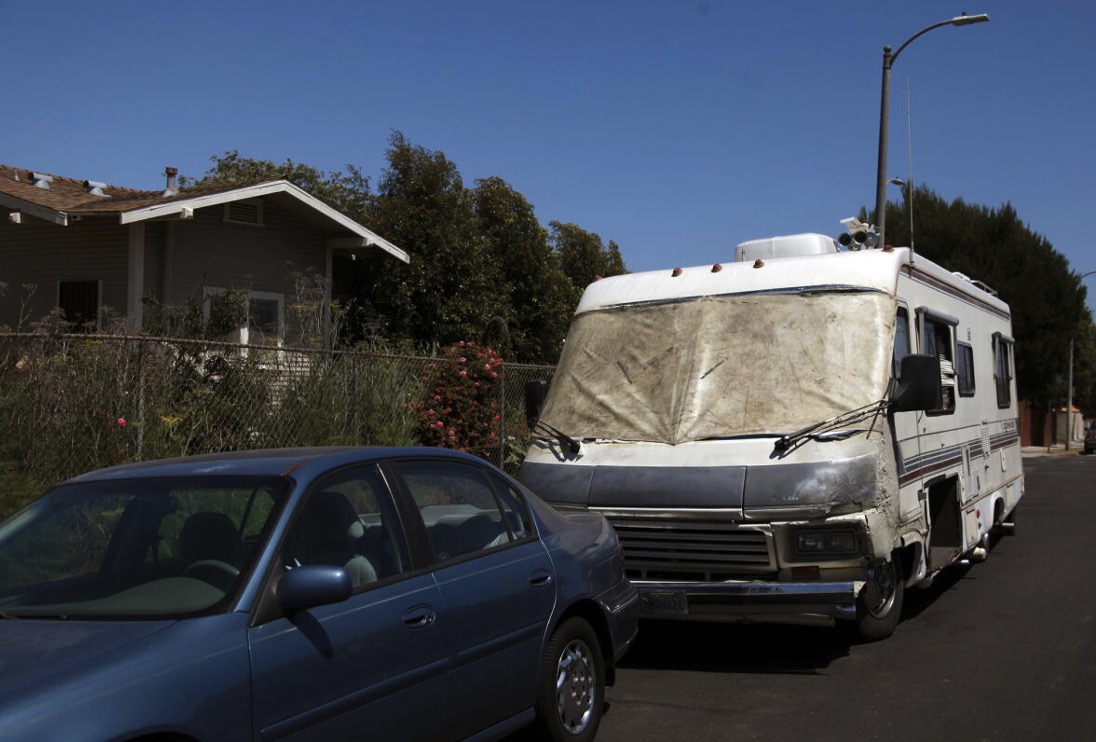
And here's Why Venice looks so bad:
Venice has become one of the city's most visible concentrations of people living on sidewalks, in vehicles and around the beach.
The problem isn't simply the number of homeless people; it is the accumulation of tents, RVs, abandoned property, trash, human waste, and deteriorating public spaces that go unaddressed for weeks, months, and even years!
And this isn't merely anecdotal.
A recent report describes hundreds of older campers and vans in Venice and estimates that 15,000–20,000 people across Los Angeles County live in cars, vans or campers.
The Venice Beach Business Improvement District or BID is essentially having to operate a parallel municipal cleaning operation.
In 2024 alone, its "Clean Team" reported:
- 13,341 bags of trash removed
- 7,066 graffiti tags removed
- 956 dumped bulk items removed
- 7,264 hours of pressure washing
- 17,293 human/animal-waste removals
The BID also reported more than 24,700 incidents resolved by its Safe Team.
That tells you something important: this isn't a neighborhood that merely needs an occasional street sweeping or washing down.
It requires a drastic makeover.
And the storefront vacancy issue is partly an economic problem.
For Venice has an unusual combination of very high commercial rents; expensive California labor; insurance costs; permitting difficulties; increased competition from online retail; seasonal tourism; persistent street disorder; and a public environment that can discourage families and higher-spending visitors from coming back despite LA securing the 2026 FIFA World Cup, the 2027 NFL Super Bowl and the 2028 Summer Olympics.
That makes marginal retail businesses particularly vulnerable, especially when Oceanfront Walk has been reduced to souvenir shops, t-shirt stores, and a random attractive venue to shop or dine!
And there is a striking contrast only a few blocks away in that Abbot Kinney Boulevard has succeeded in creating a highly desirable commercial environment while much of the Boardwalk struggles. Rents on Abbot Kinney can approach Beverly Hills levels, while older Washington Boulevard establishments have survived partly because of their long-standing local customer base.
For the truly interesting question that remains, why doesn't LA invest in undervalued public spaces like Venice Beach where homes prices and rentals continue to skyrocket?
At the end of the day, why is Venice Beach simply disregarded as a true economic asset like a South Beach in Miami?
And why is the country's second largest city so far in the dark as an economic engine?
For example, the Venice Beach BID's assessment structure was projected at approximately $2.48 million in 2026, with about $1.78 million going to Clean & Safe programs.
But much of that is reactive maintenance rather than transformational, economic investment.
For the city also has substantial responsibilities for the beach, boardwalk, recreation facilities, sidewalks, streets, policing, sanitation, homelessness and infrastructure.
So you have a strange dilemma:
Millions are spent trying to keep Venice from getting worse, but comparatively little is spent making Venice dramatically better!
Let's look at neighboring Santa Monica and their investment in the struggling Third Street Promenade, a direct tourist competitor of OFW.
Santa Monica is investing in the Third Street Promenade and, more broadly, in downtown Santa Monica. In fact, this is a valid economic comparison with Venice because Santa Monica has adopted a much more deliberate revitalization strategy.
Why is a small city of less than 100,000 so much more competent and competitive in protecting public assets like Third Street versus LA and Venice Beach?
Santa Monica has proposed a $109.8 million FY 2026–27 capital program and $116.6 million for FY 2027–28, its largest capital-project push since the pandemic. The city says the program is intended to improve public spaces, infrastructure, tourism and economic activity.
Regarding Third Street, Santa Monica has created an Economic Development Task Force whose stated mission includes revitalizing the space and other commercial corridors. Santa Monica has also created an outdoor Entertainment Zone on the Promenade, allowing participating restaurants and bars to sell alcoholic drinks for consumption within designated areas.
They get it.
They understand the need for this kind of economic development incentive!
For what Venice requires is a true "renaissance" strategy.
Why isn't it treated like what it needs to be, an international tourist destination rather than an extension of a local neighborhood?
For Venice Beach to have a chance, it must be reorganized governmentally as a private/public restoration authority with a single objective in mind, economic expansion, vitality, and growth that eliminates the social ills and setbacks that cannot exist in an area designed for tourism both in and outside of California.
Take the Boardwalk, Ocean Front Walk, Windward Plaza, the beach, Pacific Avenue and the major commercial corridors away from the City and County of Los Angeles into an independent, quasi-public/private entity that is not deterred by bureaucracy, redundancies and overall incompetent management.
What is needed is a management authority that has independence from the current cast of characters who don't have the skill set or vision to create something so much more exciting and compelling.
Find that one person or individual who has the know how unincumbered by politics or the past to take hold of an economic blueprint and run with it over a ten-year timeline to make this happen.
Power brokers like Steve Soboroff, Casey Wasserman, Maria Salinas, Gene Seroka, Rick Caruso and Earvin "Magic" Johnson come to mind.
While the BID is already doing impressive work. The problem is that the BID shouldn't have to carry so much of the load.
LA should provide daily pressure washing, restroom cleaning, and trash collection as well as graffiti removal, illegal dumping removal, lighting repairs and an overall capital plan of $100 million dollars annually to get this venue back in fighting economic shape.
Solve the RV problem rather than endlessly moving RVs around Washington Boulevard and throughout Venice. Parking enforcement plus designated parking plus housing/services plus towing for abandoned/unsafe vehicles. Not allowing the public right-of-way to become a de facto campground while building dozens of new public bathrooms paid for by corporate sponsorships and partnerships.
For a destination receiving tens of thousands of visitors every day, public bathrooms are a required infrastructure investment.
Venice Beach should have beautiful, clean, staffed public restrooms, not facilities that visitors are reluctant to enter.
And let's create incentives to fill these retail vacancies through ideas that drive new and long-term tenants that see Venice Beach as this recovering urban enclave that needs and demands a second chance!
How about temporary business tax incentives, grants, expedited permits, pop-up leases, grants for retailers and economic assistance to convert "dead" retail to residential or other active use alternatives.
For a dark, empty storefront on Ocean Front Walk sends a psychological message that this place is dangerous and in distress.
An occupied storefront sends the opposite message.
Venice doesn't need to become Beverly Hills.
It needs to become a cleaner, safer, and a better-maintained version of Venice.
Let's keep the legitimate street performers; the skateboard culture; Muscle Beach; independent businesses; artists; and the eclectic counterculture and architecture as reasons for returning and coming back again.
Why not a minor league baseball team and facility affiliated with the Dodgers or a Hollywood Bowl style structure?
Why not a new pier that would create hundreds of construction jobs for years?
It's time to make the right choices and eliminate the accumulated garbage; abandoned property; graffiti; neglected storefronts; deteriorated sidewalks; unmanaged encampments and filthy public facilities.
Let's make tourism part of the overall funding equation and here's where Los Angeles has missed a golden opportunity.
Venice isn't just a neighborhood.
It's an international tourist attraction.
If 28,000–30,000 people visit the Beach/Boardwalk every day, that's roughly 10–11 million annually! How much new and unanticipated economic activity can Venice generate for the city, and how much of that revenue circles back into Venice?
What we have is a governmental "mismatch" that doesn't and will never work.
It isn't a neighborhood by the beach. It is a world-famous destination that also contains a neighborhood.
Let me emphasize this; it doesn't require turning Venice into a sterile corporate theme park.
The solution isn't to eliminate what makes Venice weird, eccentric and authentically Venetian.
The time is now to fix the problems we all see each and every day.
Invest in cleanliness, eliminating homelessness, greater policing, inviting storefronts, bathrooms, streetscape, tourism and economic development is the answer.
We all know the problem, the question is Los Angeles or Venice tough ebough to deliver the answer?
(Nick Antonicello is a thirty-three-year resident of the Venice neighborhood and a member of the Oceanfront Walk Committee of the Venice Neighborhood Council. A regular contributor to City Watch LA, he can be reached via e-mail at [email protected] )