
Fundraiser Outside CD1 Raises Questions About Representation and Accountability
EASTSIDER - Residents and business owners in Los Angeles City Council District 11 (CD11) have expressed growing frustration following news that former Councilmember Mike Bonin and his husband, Sean Arian, are hosting a fundraiser at their home for CD1 Councilmember Eunisses Hernandez, who is seeking reelection.
An invitation to the event was distributed to individuals who live or own businesses in CD11. According to several recipients, the outreach raised concerns about why residents and business owners outside CD1 were being solicited to support a candidate whose performance directly affects constituents elsewhere. Some recipients also reported that individuals who own property in CD11 but reside in CD1 received the invitation, adding to confusion about the target audience for the fundraiser.
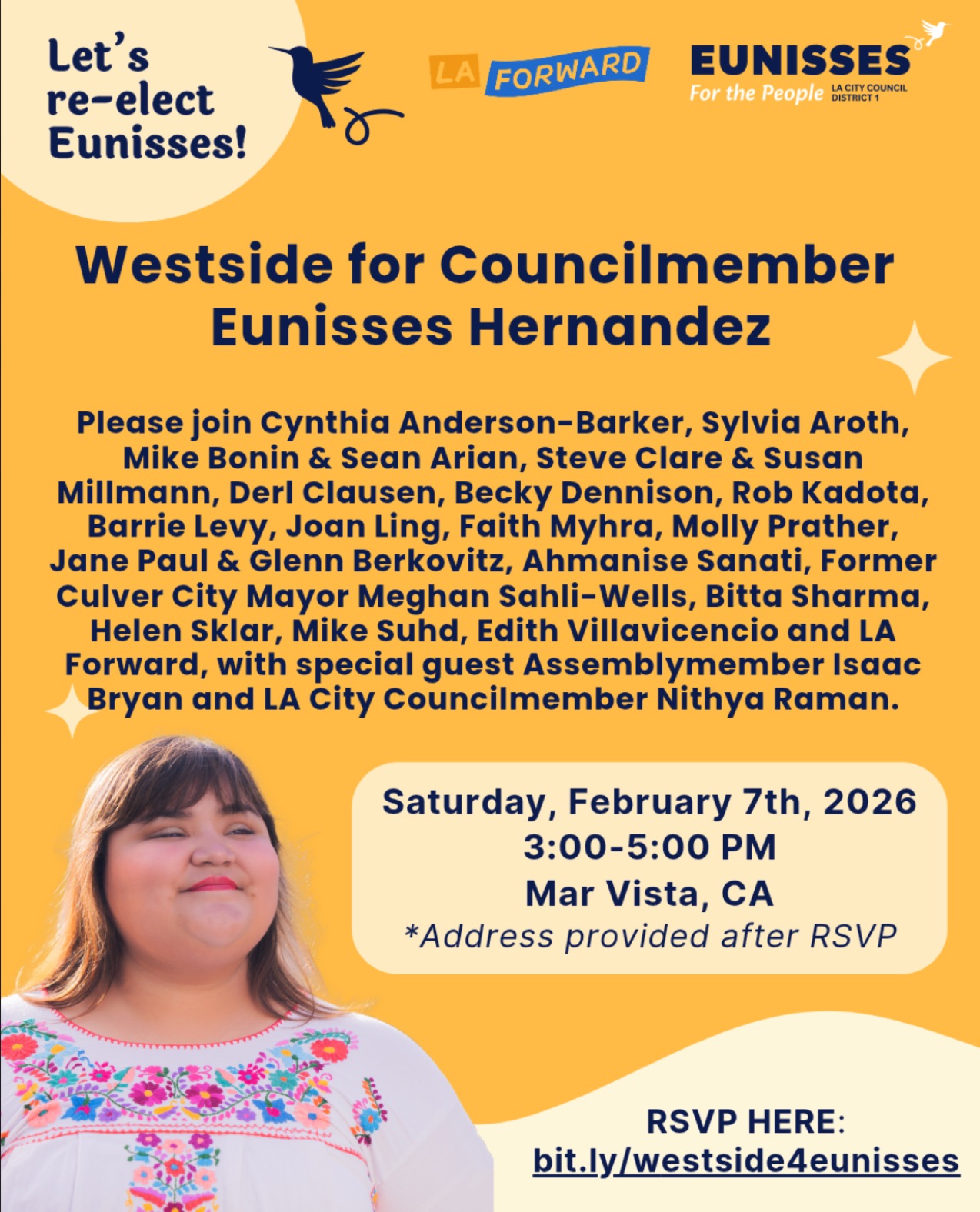
The situation has prompted broader questions: How familiar are CD11 residents or business owners with the day-to-day conditions and constituent services within CD1? And how should voters evaluate a councilmember’s record when they do not live in the district affected by that representation?
Council District 1 includes the Westlake area and MacArthur Park, portions of Chinatown, Lincoln Heights, Highland Park, Glassell Park, and Cypress Park—communities that have faced persistent challenges related to homelessness, public safety, and quality of life.
Chinatown Fire and Encampment Concerns
Prior to an early-morning fire in Chinatown on September 13, 2024, which displaced more than 50 elderly residents, multiple calls were reportedly made to the CD1 office regarding a homeless encampment located at an abandoned construction site adjacent to a senior housing complex. Residents say they received no response. The Los Angeles Fire Department later indicated the fire was likely caused by activity connected to the encampment.
Councilmember Hernandez has consistently stated her opposition to clearing encampments without housing alternatives, a position that continues to generate debate among residents who cite public safety risks and delays in intervention.
Highland Park Metro Station
At the Highland Park Metro Station, a large encampment persisted for months despite complaints from nearby businesses and residents regarding increased crime and overdoses. According to community members, three overdose deaths were reported in the area during that period, and several assaults were reported by patrons and employees along North Figueroa Street.
After public outcry, Paul Webster of the Los Angeles Alliance, which filed a federal lawsuit alleging the City of Los Angeles failed to meet its housing obligations, requested that Highland Park be added to the litigation. The encampment was temporarily removed but later returned. Residents report that meaningful intervention did not occur until the Mayor’s Office became involved, at which point individuals were eventually placed through the Inside Safe program.
Westlake and MacArthur Park
Conditions in the Westlake area and MacArthur Park have remained a source of ongoing concern. Business owners, including the owner of Langer’s Delicatessen, have publicly expressed frustration over crime, illegal drug use, and sanitation conditions surrounding the park.
Residents report frequent overdoses requiring LAFD response and describe seeing individuals incapacitated by drug use on park grounds. Critics ask what concrete steps have been taken to restore MacArthur Park as a safe and functional public space.
NY Post article about drug use in MacArthur Park.
RV Encampments Near Avenue 26
In December 2025, an ABC television news segment highlighted complaints from residents and business owners near Avenue 26 and Humboldt Street regarding crime, drug activity, and sanitation issues associated with RV encampments. During the interview, Councilmember Hernandez acknowledged sewage, trash, and safety concerns but stated she would not seek removal of the RVs.
Nearby businesses along San Fernando Road have reported break-ins, and employees at the St. Vincent de Paul thrift store, which has been burglarized multiple times, believe the RV encampments may be contributing to the problem.
Ordinance 41.18 and Enforcement
Los Angeles Municipal Code Section 41.18 restricts encampments in designated areas, including near schools, churches, and city facilities, but enforcement requires posted signage and councilmember authorization. According to CD1 staff statements attributed to a representative for Northeast Los Angeles, Councilmember Hernandez opposes use of the ordinance.
In some areas, including East Avenue 45, signage is already posted, yet encampments remain adjacent to the signs. Nearby religious institutions have experienced repeated vandalism and break-ins, and residents report lengthy delays before CD1 responds to cleanup requests.
Local neighborhood watch groups and business owners say they often conduct cleanups themselves with assistance from LAPD Senior Lead Officers rather than waiting for council office action.
Absence from Candidate Forums
Community members also note that Councilmember Hernandez has been absent from several local candidate forums, fueling criticism over accessibility and responsiveness during an election year.
Questions for Voters
Given these ongoing issues, critics question whether residents and business owners in CD11, many of whom received invitations to a private fundraiser, are fully aware of the record and unresolved concerns within CD1.
CD 11 covers the Brentwood, Del Rey, Mar Vista, Marina del Rey ,Pacific Palisades, Palms, Playa del Rey, Playa Vista, Sawtelle, Venice, West Los Angeles, Westchester and the Los Angeles International Airport.
As the election approaches, constituents continue to ask whether their experiences are being adequately represented—and whether outside political support reflects accountability to the communities most directly affected.
(Tony Butka is a veteran Eastside community activist with decades of experience in Los Angeles civic life. He has served on a neighborhood council and worked extensively within local government, bringing deep knowledge of policy, budgeting, and urban planning to his advocacy. As a regular contributor to CityWatchLA, Butka offers sharp commentary on city politics, development, and grassroots issues. His writing reflects a commitment to transparency, accountability, and amplifying the voices of historically underserved communities.)