
Is Exchange LA Safe in an Earthquake? Building Owner Asks Cal/OSHA to Investigate
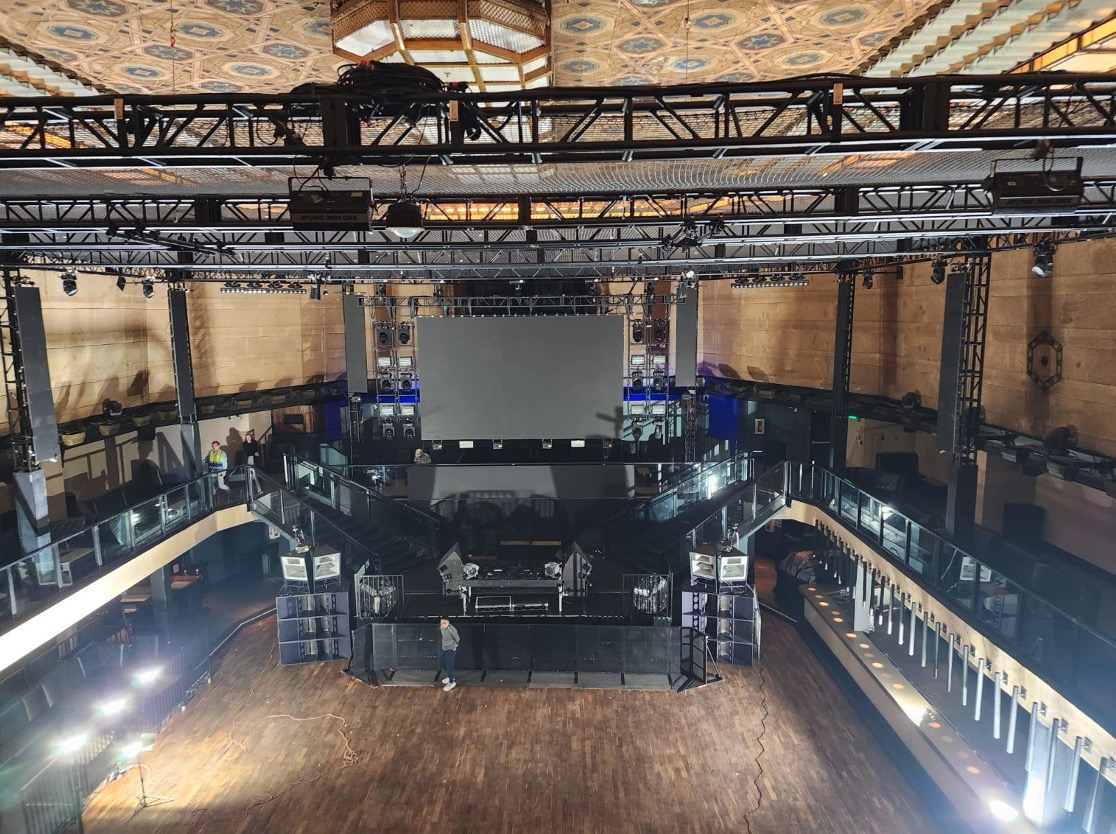
PUBLIC SAFETY - On an event night at Exchange LA, hundreds of people may see the lights, screens and spectacle of one of downtown Los Angeles’ best-known nightclubs.
What they do not see is the complicated system suspended above them.
Workers rig lighting beneath an aluminum truss. Video technicians run cables overhead. Security, bartenders and floor staff work below. Maintenance employees sometimes go above the ceiling, where chains supporting a large video display pass through to the floor above.
Now the owner of the historic former Los Angeles Stock Exchange building at 618 S. Spring Street is asking Cal/OSHA to inspect those conditions and determine whether the combined system is safe in an earthquake.
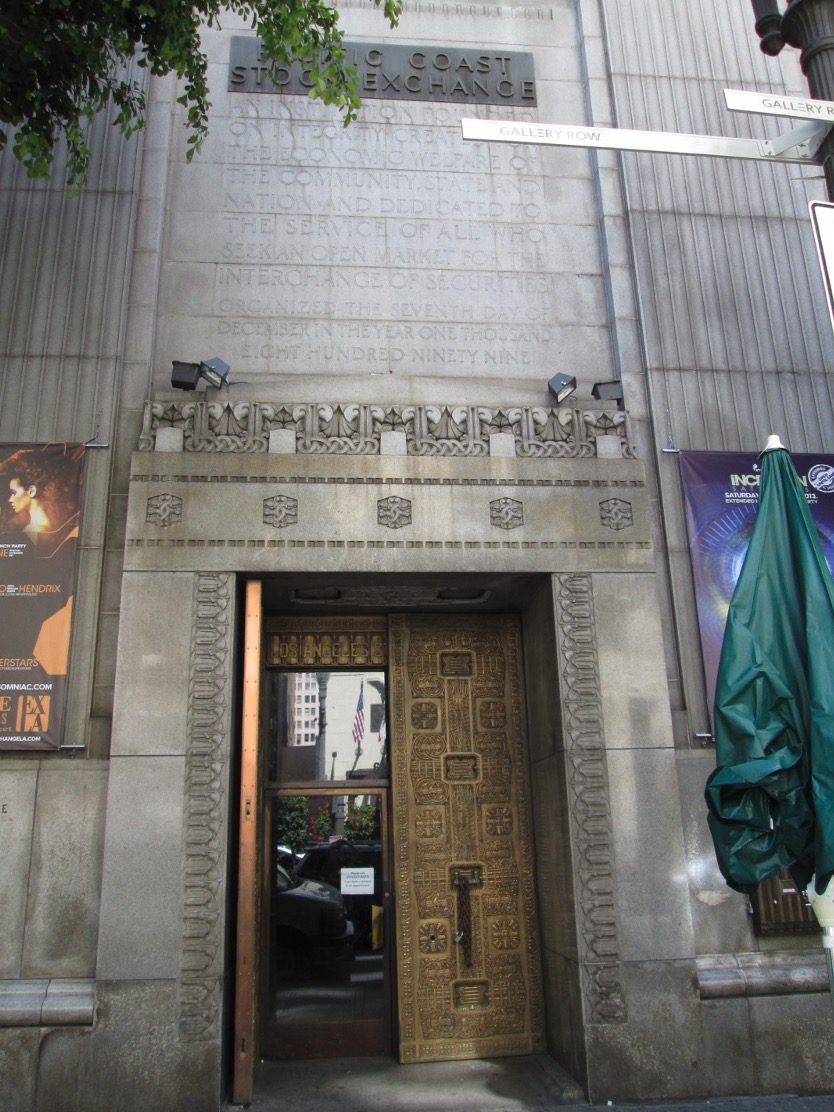
Michael Chang, owner of record for the building, has submitted a detailed complaint asking regulators to examine the ceiling, protective netting, temporary aluminum truss, lighting equipment, suspended video screens and fire-protection system.
Chang says he is not seeking to shut down the nightclub.
“I am asking that the people who work in this room be protected from what the engineers have already written down,” he told Cal/OSHA.
A Ceiling Already Showing Damage
The original plaster ceiling sits roughly 40 feet above the dance floor.
According to Chang’s complaint, a plaster ceiling tile fell onto the dance floor during an event in January 2024, allegedly injured three patrons. Structural engineers later reported that penetrations through the ceiling had damaged some of the wires supporting individual tiles and warned that damaged tiles presented “a greater risk of falling to the floor below.”
A November 24 walkthrough counted 36 penetrations in the ceiling, including openings for chain hoists and others around the stage and center light fixture. More than 25 Masonite boards had reportedly been installed over damaged areas.
Below that ceiling is a fabric mesh designed to catch falling debris.
But Chang says the engineering documents he reviewed show the net was checked for a static debris load, while he could find no corresponding analysis of what happens when ceiling material actually falls and strikes it.
A “Temporary” Truss Still in Place
The net is supported by an aluminum truss that its designer described as a temporary structure.
Engineering documents cited by Chang state that the truss was designed with an installation duration ranging from six weeks to one year.
A tenant consultant told a Los Angeles city inspector in May 2024 that the truss and netting had already been erected. By the time of Chang’s complaint, the structure had remained in place for more than two years.
The truss also raises another question: how it responds to lateral movement.
Its designer stated that the structure was not reviewed for full seismic loading, although a lateral acceleration of 0.2G was used to evaluate deflection and load paths.
According to the engineering documents, the structure is stabilized sideways by tightening scaffold screwjacks against the building walls rather than fastening the truss directly to the historic structure.
At the same time, the designer stated that no review of the existing building was included in the analysis.
A separate engineering firm also observed that the bases of the vertical truss sections did not appear to be attached to the floor, potentially limiting their ability to resist lateral forces. Pasted markdown
What Happens When the Building Moves?
That is the central issue raised by the complaint.
A separate video display consisting of 72 individual screens hangs from chains extending through the ceiling from the floor above.
Structural engineers retained by the building owner warned that the video array lacks lateral bracing below the ceiling.
Their report described what could happen during an earthquake: the suspended screen and ceiling could move independently, causing chains or cables to strike the edges of ceiling tiles. The screen itself could sway into nearby improvements, potentially damaging the display, the building or people below.
The concern is not one isolated component, Chang argues, but the combination of all of them.
During shaking, the video array could sway. Chains could strike ceiling tiles, including tiles whose supporting wires have already been damaged. Falling material could land on the protective net. That net is supported by the temporary truss, which itself carries lighting equipment.
And beneath the entire system are employees and event staff.
Earthquake Followed by Fire
Chang’s complaint also raises the potential for fire following an earthquake.
He cites historical earthquake research showing that electrical failures have been responsible for a substantial share of post-earthquake fires.
At Exchange LA, lighting and video equipment are suspended overhead, while a June 2026 service report said a fire-pump test could not be completed because the jockey pump would not start. A generator leak was also reported.
Chang says he does not know the cause of the fire-pump problem and does not claim the fault remains unresolved. He says only that he has not received documentation showing that it was corrected.
The Court Case Did Not Decide Seismic Safety
The dispute has already reached federal bankruptcy court—but over a different question.
In September 2026, the court ruled in favor of the nightclub tenant in a lease dispute involving the truss and netting.
The court found that the freestanding netting system was a reasonable safety measure intended to protect people and property from falling debris and did not constitute an unauthorized alteration under the lease.
Chang stresses that the ruling did not determine whether the system was safe during an earthquake.
According to his complaint, the words “seismic” and “earthquake” do not appear in the court’s 45-page findings. Four experts retained by Chang were excluded because their reports were not served by a court-imposed deadline, and no engineer testified.
The tenant’s principal testified that engineers had designed the system to be seismically safe.
But the truss designer’s own letter states that the temporary structure “was not reviewed for seismic loading,” aside from the 0.2G lateral-load check.
Chang argues that the discrepancy deserves an engineering review rather than a legal interpretation.
What Chang Wants Cal/OSHA to Do
The building owner is asking Cal/OSHA for several specific actions.
He wants inspectors to examine the damaged ceiling suspension, the suspended video array, the ceiling penetrations, the temporary truss and its lateral bracing, the lighting attached to the truss and the building’s fire-pump system.
He is also asking for an engineering evaluation of the entire ceiling-net-truss-lighting-video system under earthquake loads, including the walls against which the truss is braced and the ability of the debris net to withstand impact.
Finally, he wants regulators to review the employers’ Injury and Illness Prevention Program and Emergency Action Plan to determine whether they adequately address earthquake hazards. Pasted markdown
Chang’s argument is ultimately straightforward:
A nightclub operating in earthquake country has workers beneath a suspended ceiling, a protective net, a temporary truss, lighting and a 72-screen video display.
The question he wants Cal/OSHA to answer is whether anyone has evaluated what happens when all of those systems begin moving at the same time.
Link to CAL/OSHA email from Michael Chang
(This article was prepared by CityWatchLA from information supplied by building owner Michael Chang.)