
iAUDIT! - In his superb novella about the nature of Heaven and Hell, “The Great Divorce”, author/theologian C.S. Lewis wrote about how difficult it is to turn away from sin. Many people stubbornly stick to their habits rather than admit they made mistakes. As Lewis wrote, “A sum can be put right: but only by going back till you find the error and working it fresh from that point, never simply by going on”. It is human nature to keep moving in a chosen direction despite the overwhelming evidence telling you to change course. What applies to personal morality also applies to political and organizational behavior.
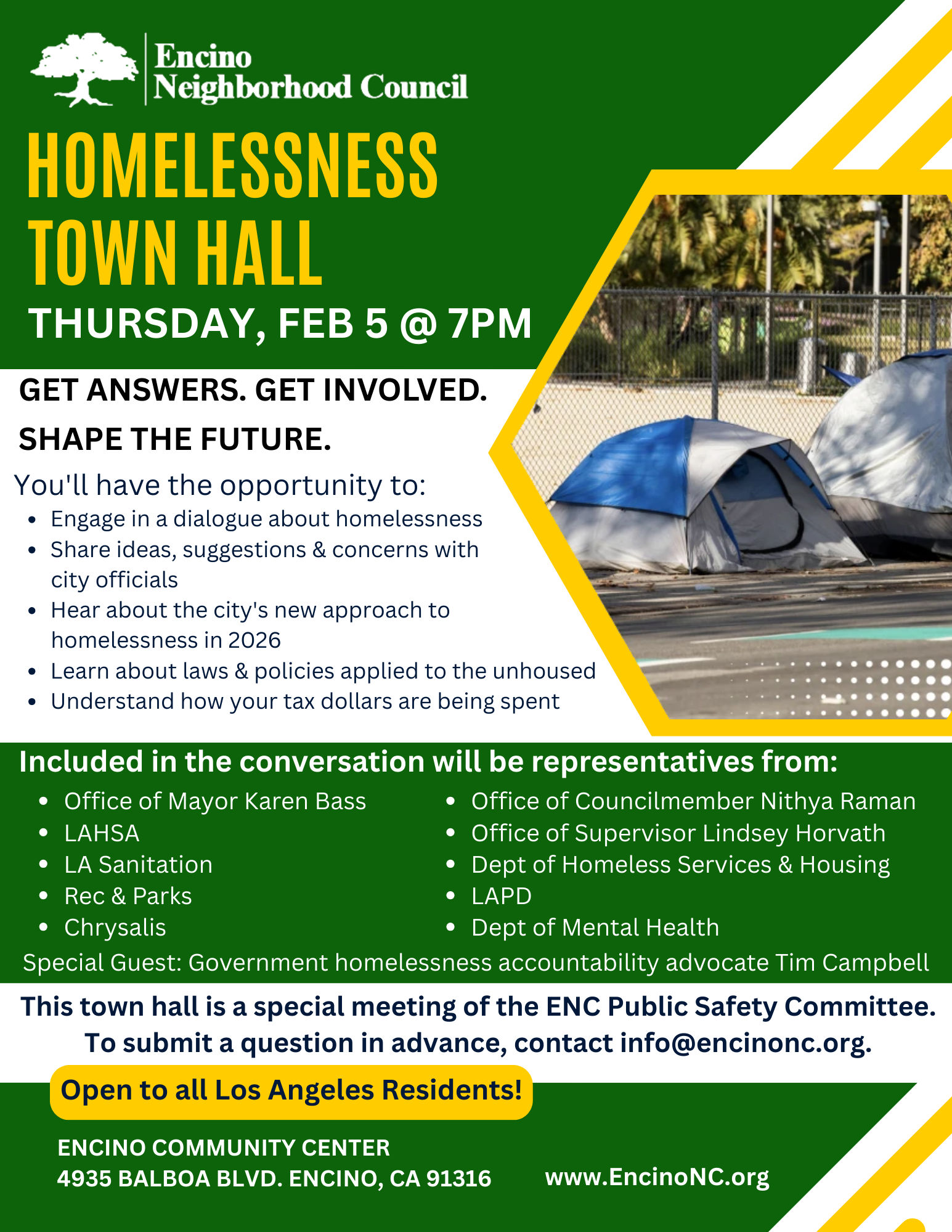
On Thursday, February 5, I will be joining a town hall discussion on homelessness at a special meeting of the Encino Neighborhood Council. Preparing for the meeting, I have been reviewing numerous audits and reviews of City, County, and LAHSA homelessness programs. Most are perfect examples of what Lewis described in “The Great Divorce”. Public officials have shown a pugnacious determination to deny there are problems with the current system and have gone to extreme lengths to defend the status quo. Although I have written in detail about many of the reports in earlier columns, a summary may be helpful to understand just how long structural problems have existed, how ingrained they are in the system, and how little has changed.
We should first consider how long problems have been known and who has been doing the evaluations. I did not include news stories or op-ed pieces in my review. I depended on objective reports from official agencies. Since 2007, there have been at least eight audits or reports on LA’s homelessness system. Reviewing agencies include the US Department of Housing and Urban Development (HUD), the LA County Auditor/Controller, the LA City Controller, and professional audit firm Alvarez & Marsal (A&M), performing a court-ordered review of the City’s homelessness programs. That number does not include an April 2024 State Auditor’s report because it includes other jurisdictions besides Los Angeles, (this is the well-known audit that reported the State of California spent $24 billion on homelessness between 2018 and 2023 with almost no measurable effect on the unhoused population). I also excluded reports before 2007 because the dollar amounts and other data may no longer be relevant.
Taken together, the audits and reports I’ve been reviewing total 620 pages, describing a history of recurring issues. Despite protestations from agency management and other leaders that some reports contain inaccuracies, all of these reports were written by professional auditors guided by strict standards; they are not mere opinions. These reports do more than describe a series of unrelated problems. Rather, they chronicle the growth of a culture of complacency. LAHSA has done little to improve its finances and contract oversight because the two agencies that provide most of its funding, the City and County, have, until recently, done nothing to hold it accountable for its performance.
The most obvious and striking thing about these audits and reports is that fundamental problems have persisted for at least 19 years, and almost nothing has been done to make substantive improvements. In 2007, HUD reported problems with LAHSA’s ability to verify provider performance, an issue repeated in 2018, 2019, 2021, 2024, and 2025. LAHSA promises to make improvements but always seems to come up with reasons why it hasn’t. For example, LAHSA has blamed chronic staffing shortages for poor contract oversight, but it has done nothing to improve employee recruitment and retention. Staffing may have been a valid excuse in 2007, when LAHSA’s budget was a little more than $100 million and it had fewer than 200 staff. Before LA County’s Board of Supervisor withdrew its funding last year, LAHSA’s budget was around $900 million, and it had more than 800 employees, begging the question of how many are enough to solve some of the issues described in the reports.
What is perhaps most startling (and disappointing) is how common serious problems with sound contract management and financial controls are, not just within a specific agency, but across the homelessness intervention structure, and how they have persisted despite larger budgets and higher staffing levels. For example, a series of reports from the LA County Auditor in 2021 found that LAHSA paid providers late and failed to request reimbursement from its funding agencies in a timely manner, resulting in serious cashflow problems. These same problems were reported three years later in a 2024 review of LAHSA’s contract management. Besides doing nothing to correct the deficiencies, LAHSA’s problems were exacerbated by the City’s lax review process. A&M’s 2025 report showed how LAHSA’s lack of review cascades to the City. LAHSA routinely pays provider invoices with virtually no review to confirm performance, and the City reimburses LAHSA based the barest documentation.
In 2019, LA’s City Controller found serious problems with the City’s outreach and transitional housing programs. Housing placement rates were as low as four percent. The Controller also reviewed LAHSA’s claim to have placed 21,000 people in housing in 2018. But auditors found 1) LAHSA aggregated numbers from all people served in Greater Los Angeles (not just the city), and served by other agencies like the VA, HACLA, and other NGO providers. 2) The figure counted people who were placed, fell back into homelessness, and then were rehoused as unique individuals if they were rehoused after more than one month. Four years later, Controller’s Office auditors found the same problems still existed, including the shelter bed availability rate being inaccurate because LAHSA allows participants to be absent from a shelter for up to three consecutive days before they lose their assigned bed. The system functions so poorly, City help center staff often resort to calling individual shelters to see if there are beds available.
The City’s problems with accurate shelter numbers persist. In a January 16, 2026, article, LA Times reporter Doug Smith provided a depressing update about the ongoing contempt hearing in federal Judge David Carter’s court. There are two key takeaways from the article, both of which have been mentioned many times by critics, including me:
- The city has no idea how many people on the street have received outreach services. Per the article, “The distinction [between outreach and acceptance] matters because the court has required the city to “offer” shelter to anyone whose tent or makeshift shelter is to be removed in pursuit of the settlement. But the city can’t track how often “offers” are made, [City CAO] Szabo acknowledged”. The city is paying millions for outreach efforts with no idea of their effectiveness nor what the outcome of any given encounter is. This goes to the heart of the issue as to why I keep saying the city pays for processes instead of outcomes. I might be a great outreach worker and get 90% of the people I talk to into a shelter, or I may suck at it and only get 10%, but I get paid the same either way.
- The City has little idea how many shelter beds its actually created under the terms of the LA Alliance settlement. Under examination by LACAN’s attorney, CAO Szabo, “...struggled to defend his testimony that the city was continuing to maintain “largely or almost all” of about 7,000 beds it was required to produce under a previous agreement that expired at the end of June. He clarified that the [sic] was referring to physical beds created by the city and acknowledged that more than 2,000 of those beds were leased with temporary subsidies that expire in two years. “I don’t know how many are still being used today,” he said.
The recent charges against the CEO of the nonprofit Abundant Blessings are an inevitable consequence of local agencies’ failure to monitor providers’ performance. Alexander Soofer has been charged with funneling $23 million in Inside Safe and Measure H money into his own pocket. The charges include allegations that instead of serving three nutritional meals per day in taxpayer-funded housing, he distributed cups of instant ramen heated in a microwave oven. This alleged fraud was blatant and long-term; the City Controller’s office began its investigation of Abundant Blessings months ago. The real surprise isn’t that the CEO was caught committing fraud; its that the City and LAHSA contracted with the nonprofit at all. A quick Internet search shows Charity Navigator gave the nonprofit a very low score of 51 out of 100, and it didn’t meet rudimentary requirements like having a real board of directors. These issues could easily have been identified before anyone paid Abundant Blessings a single penny. What is truly dismaying is that given local agencies’ dismal record of financial and managerial controls, Abundant Blessings may just be the first of many other cases of fraud.
One of the most profound ideas in “The Great Divorce” is that people choose to be in Hell. The book’s entire premise is that anyone can leave Hell whenever they want simply by admitting the mistakes they made in life, but most refuse out of arrogance, pride, or self-delusion. The same situation is in play with LA’s homelessness program leadership. They simply refuse to admit the serious structural problems that are obvious to most objective observers. Responding to the County’s move to reduce funding for LAHSA, Angelinos were treated to the spectacle of Mayor Bass and Councilmember Raman sending the Board of Supervisors an urgent letter begging them to continue fund the failed agency, and then stopping their city work so they could attend the BOS meetings, where they were assiduously ignored. In “The Great Divorce”, the damned choose an eternity of suffering over recognizing the reality of their errors. Our local leaders are willing to damn 75,000 unhoused people to life on the streets until they admit the error of their ways.
(Tim Campbell is a longtime Westchester resident and veteran public servant who spent his career managing a municipal performance audit program. Drawing on decades of experience in government accountability, he brings a results-driven approach to civic oversight. In his iAUDIT! column for CityWatchLA, Campbell emphasizes outcomes over bureaucratic process, offering readers clear-eyed analyses of how local programs perform—and where they fall short. His work advocates for greater transparency, efficiency, and effectiveness in Los Angeles government.)