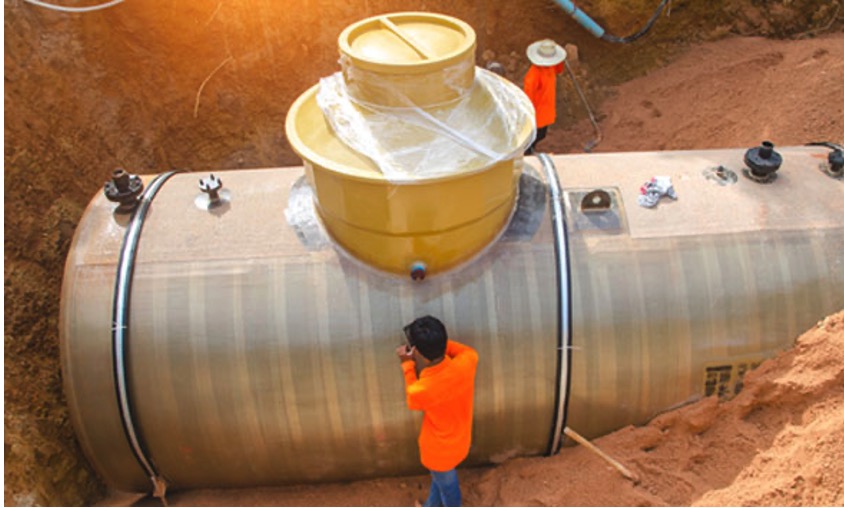
INSURANCE - In the past 10 years, commercial insurance has changed dramatically across America. Environmental liability used to be readily included in a general business policy, but no longer is, with insurers now viewing fuel storage (both aboveground and underground) as an area of high exposure. When facility managers or property owners receive a request for a formal assessment from their insurers, this is not just a suggestion; this is a condition, unlike those that would prevent coverage. Further, having a certified fuel tank inspection is one of the best tools for mitigating risk and protecting a company's ability to be insured, limiting their environmental liability, and providing assurance of continued operations in a highly-regulated environment.
The Risk Management Perspective: Why Insurers Care
From an actuarial standpoint, an uninspected fuel tank is a "silent" liability. In the U.S. insurance market, carriers are increasingly wary of aging infrastructure. Steel tanks, regardless of their initial build quality, are susceptible to internal and external corrosion, microbial growth, and structural stress over time.
Insurers prioritize these inspections because the cost of a "hidden" leak—one that persists for months before detection—frequently reaches six or seven figures in soil and groundwater remediation. By requiring a report from a certified tank inspection company, the insurance provider shifts the burden of proof onto the policyholder. This documentation provides the "due diligence" necessary to justify the risk of the policy. It confirms that the tank is structurally sound and that the monitoring systems are functional, effectively separating "sudden and accidental" events from "gradual pollution" caused by negligence.
Compliance vs. Insurability: Understanding the Standards
Business owners often believe that they only have to conform to the minimum requirements of the EPA's federal and state regulations in order to satisfy their insurance company’s underwriting criteria; however, while the EPA, state EPA and DEP provide a legal foundation for what is an acceptable level of environmental protection, they do not define the criteria for how an underwriter will evaluate a business for insurance coverage.
Underwriters tend to look for businesses that are built to more than just compliance with the law; most underwriters are interested in seeing that the business meets or exceeds what is considered to be the maximum reasonable standard of care for the business. For example, many underwriters regard compliance with the American Petroleum Institute (API) 653 or the Steel Tank Institute-Standard SP001 to be the appropriate threshold for evaluating whether or not a business meets the minimum standard of care when determining how to price insurance.
A typical underwriter does not rely on the visual inspection of a facility (i.e., walk-through) in determining compliance with the law or evaluating the level of exposure to environmental hazards or risks to the public, but will conduct numerous tests of the facility in question, including but not limited to ultrasonic thickness testing, vacuum testing of interstitial space, or integrity testing of the secondary containment area before they can make a determination regarding pricing and ultimate acceptance of the facility.
In order for a facility to be considered "insurable" by the insurance market, it must not only follow government regulations, but also establish its ability to provide a safe workplace through the use of professional certifications.
Addressing Common Industry Concerns
When navigating these requirements, facility managers often find themselves asking similar questions. Understanding these nuances can help in preparing for a successful inspection and maintaining an active policy.
How often do fuel tanks need to be inspected?
How often you have a certified inspection of your tank will usually be based on its construction, contents, and grounding conditions. Typically, an external certified inspection is performed about every five years for commercial aboveground tanks (ASTs); however, internal certified inspection may occur on a more frequent schedule (e.g., every 10 to 20 years) if the AST is located in environmentally sensitive areas or is more than 25 years old, in which case your insurance company may require more frequent inspections to manage the greater probability of failure.
Does insurance cover a leaking fuel tank?
This is a nuanced area of U.S. commercial law. Most standard General Liability policies specifically exclude "pollution events." To get coverage, businesses must often purchase a separate Environmental Impairment Liability (EIL) policy. Even then, coverage usually applies only to "sudden and accidental" releases. If an inspection reveals that a leak was caused by years of ignored corrosion or a lack of maintenance, the insurer may deny the claim based on a "failure to maintain" clause.
What happens if my tank fails a certified inspection?
A "failed" inspection is not a dead end, but it does require immediate action. Usually, the inspector will categorize findings into "mandatory repairs" and "recommended improvements." To maintain insurance coverage, the owner must typically provide a timeline for repairs or a plan for tank replacement. Addressing these issues before a leak occurs is significantly less expensive than the alternative of a policy cancellation or an environmental cleanup.
Operational Benefits Beyond the Policy
While the primary driver for an inspection may be the insurance renewal, the process offers tangible operational value. A certified professional can identify fuel quality issues—such as the accumulation of "sludge" or water—before they cause expensive equipment failure in backup generators or heating systems.
Furthermore, a clean inspection report is a powerful asset during property transactions or refinancing. In the United States, commercial lenders are just as risk-averse as insurance companies. Having a recent, certified inspection on file can streamline the "Environmental Phase I" assessment process, protecting the resale value of the real estate and proving to stakeholders that the facility is managed with professional foresight.
Responsible Use and Compliance
This is a reference-only document about laws related to the environment that may vary from state-to-state and, in some cases, from area-to-area within a given state. Massachusetts, for example, has different laws on environmental matters than the surrounding states. To ensure that your facility meets the laws of the state, county, and federal government, you should work with a licensed insurance broker and an environmental expert. For additional technical information about secondary containment and inspection requirements, the Steel Tank Institute has a number of examples of those requirements.
Conclusion
An accredited fuel tank inspection is not merely a "check-in-the-box" for an insurance agent; it represents an investment to improve your company's future security and environmental image by locating areas of vulnerability and preventing these from developing into catastrophic events resulting in an injury to your financial assets, your company's reputation, or the local community. Now is the time to validate your compliance before you renew your insurance policy and to prepare your infrastructure for the increased scrutiny of today's modern insurance underwriters.
###