
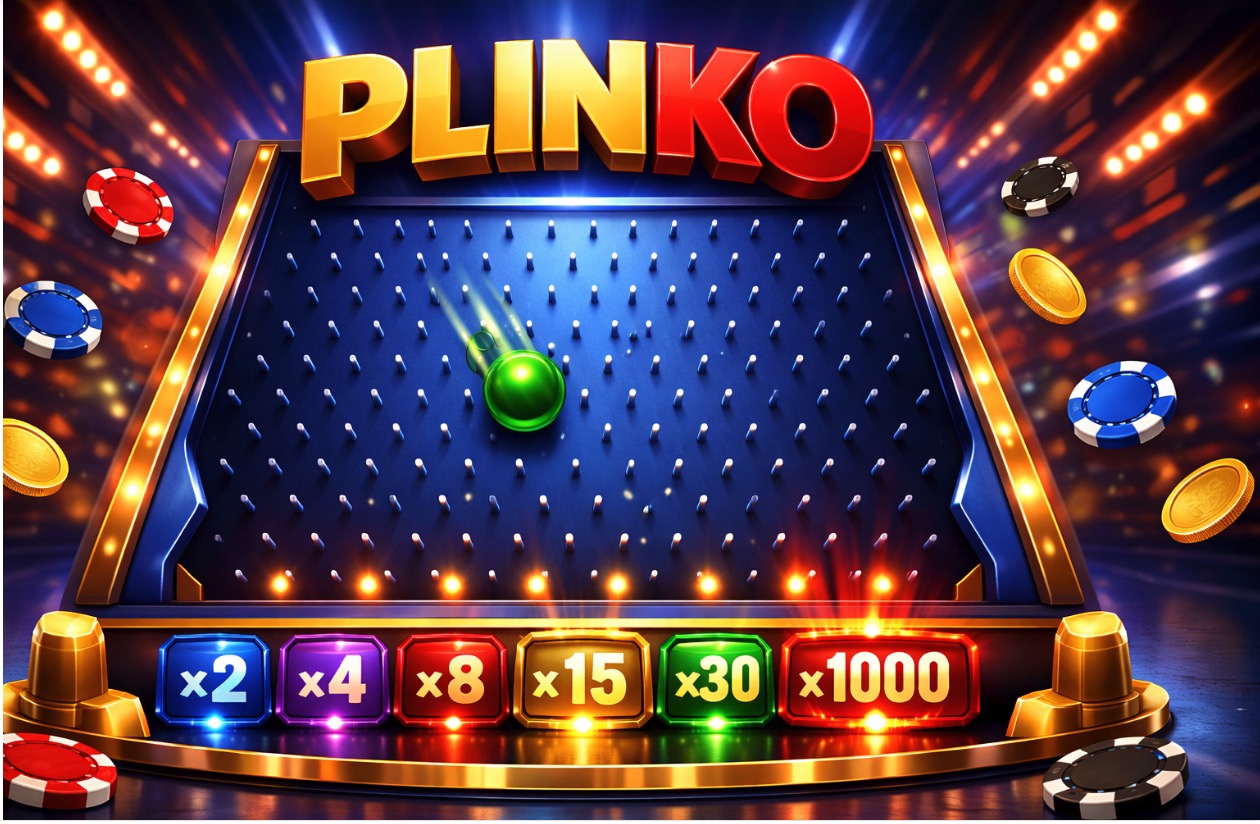
GAMING - Plinko is an online casino game that uses a single falling ball to determine outcomes. Players release a ball from the top of a vertical peg board. As it bounces through the pegs, it eventually lands in a slot containing a multiplier. That multiplier is applied to the player’s bet to calculate the round result.
Unlike traditional slot machines, the game does not rely on reels, symbols, or paylines. Every round is independent. Before initiating a drop, players select the bet amount, the number of rows, and the level of risk. These choices determine session volatility and potential winnings.
Many beginners start by observing demo rounds or reading guides. A useful reference is Plinko casino, which explains how board height, multiplier placement, and risk influence gameplay. It also shows visual examples, illustrating the interaction between the ball and pegs, as well as the probability of landing in specific slots.
The game’s origins are rooted in a physical disc-drop game, adapted for online play. Online versions maintain the visual bounce animation but calculate outcomes using a random system before the ball moves. This ensures fairness and consistent session logic.
Transparency is a core feature. Players can view all multipliers before dropping a ball, providing full information for decision-making. There are no hidden mechanics or bonus rounds; each drop is self-contained.
Key characteristics of the slot
|
🎯 Parameter |
Value |
|
🎲 Game type |
Single ball drop |
|
💵 Minimum bet |
$0.10 |
|
🤑 Maximum bet |
$1000 |
|
🔢 Rows |
8–16 |
|
🎚 Risk levels |
Low, Medium, High |
|
🏆 Multiplier range |
1×–1000× |
|
📊 RTP |
~99% |
|
🕹 Play mode |
Manual / Autoplay |
|
🌐 Platform support |
Desktop, Mobile, Web |
|
🔒 Fairness |
RNG / Provably Fair |
|
📉 Round history |
Available |
|
🎨 Interface |
Minimal and clear |
|
⏱ Round duration |
5–15 seconds |
|
🌍 Currency |
Fiat and cryptocurrency |
|
🔄 Session type |
Continuous rounds |
These parameters guide session planning. Board height defines the number of peg interactions, risk affects multiplier placement, and the bet size sets exposure. Together, they allow players to manage session behavior intentionally rather than relying solely on chance.
Understanding a round
A single round progresses as follows:
-
🎯 Select a bet amount
-
🔢 Choose board height
-
🎚 Set risk level
-
🕹 Release the ball manually or via autoplay
-
📉 Observe the ball bouncing through pegs
-
🏁 Receive the multiplier result
The visible path is only a representation. The result is pre-determined. Timing or angle of release does not influence outcome. Manual release simply starts the round at the chosen moment.
Board height and complexity
Board height affects gameplay and variance:
-
Fewer rows mean fewer bounces, smaller variance, and more predictable outcomes
-
Medium rows create moderate complexity and balanced multiplier distribution
-
Maximum rows increase the chance for rare, extreme multipliers
Understanding this factor is crucial for session planning. Many players underestimate how board height interacts with risk and multiplier distribution.
Risk levels
Risk affects where multipliers are located on the board:
-
Low risk places higher-frequency multipliers near the center, generating frequent small wins
-
Medium risk spreads multipliers across the board for mixed outcomes
-
High risk concentrates large multipliers near edges, resulting in rare, high-value outcomes
Center slots appear more frequently. Edge slots are much less likely to occur. High risk increases possible rewards without guaranteeing a win.
Entry session examples
|
🎯 Player type |
💵 Bet |
🔢 Rows |
🎚 Risk |
🎯 Goal |
|
Beginner |
$1 |
8 |
Low |
Learn mechanics |
|
Explorer |
$2 |
10 |
Medium |
Compare outcomes |
|
High-risk |
$5 |
16 |
High |
Target extreme results |
Players can create different session experiences without changing game mechanics, simply by adjusting board height, risk, and bet size.
Tips for beginners
-
🎯 Review multiplier positions before starting a session
-
🔢 Start with fewer rows for predictable outcomes
-
🎚 Use low risk for initial sessions
-
💵 Set a bankroll limit for each session
-
🔄 Modify only one parameter at a time
Following these steps ensures players understand how multipliers behave and how balance fluctuates without unnecessary losses.
How rounds operate in Plinko
Every round is independent. The ball begins at the top of the board and interacts with pegs, bouncing unpredictably until it lands in a multiplier slot. While the motion appears random, the outcome is calculated by a random system before the drop begins.
The standard sequence of a round is:
-
🎯 Select bet size
-
🔢 Choose the number of rows
-
🎚 Decide the risk level
-
🕹 Release the ball manually or enable autoplay
-
📉 Observe the ball bouncing through the pegs
-
🏁 Receive the multiplier and credit it to the balance
Manual play influences the rhythm of a session rather than the results. Autoplay allows multiple rounds in sequence without interaction, which is useful for testing strategies or extended play. Both modes can be combined with session limits for controlled gameplay.
Multipliers and distribution patterns
Multipliers are fixed at the bottom of the board, but their positions change based on risk selection. High multipliers tend to appear on the edges, while lower multipliers cluster near the center.
|
🎲 Risk Level |
🔢 Rows |
🟢 Center Multipliers |
🔴 Edge Multipliers |
|
Low |
8 |
1×–3× |
0×–2× |
|
Medium |
12 |
1×–10× |
0×–20× |
|
High |
16 |
1×–50× |
0×–1000× |
Center slots are more frequently hit. Edge slots are rare but potentially very rewarding. Longer boards increase the chance for extreme outcomes because the ball has more interactions with pegs, allowing wider distribution of multipliers.
Understanding these patterns helps players anticipate session behavior. While the system is random, planning for volatility reduces surprises and improves balance management.
Interaction of board height and risk
Board height and risk level jointly define session complexity:
-
Fewer rows combined with low risk produce steady, small wins.
-
Medium rows with medium risk balance payout frequency and multiplier size.
-
Maximum rows and high risk create high volatility with rare, large results.
This allows players to tailor sessions according to personal goals without changing the game rules. Adjusting these settings is more impactful than merely increasing bets.
Session strategies
Three common approaches emerge:
-
🎯 Conservative: low risk, fewer rows, frequent small multipliers.
-
⚖️ Balanced: medium risk, medium rows, mixed outcomes to explore the board.
-
🚀 Aggressive: high risk, tall boards, rare extreme multipliers for potentially large wins.
Conservative sessions allow longer play and careful observation. Balanced sessions combine learning with occasional larger payouts. Aggressive play is suitable for short, high-volatility sessions aiming for rare outcomes.
Differences from traditional slots
Plinko differs significantly from standard slot games:
-
No reels or symbols
-
No hidden bonus rounds
-
Multipliers are visible at all times
Players can see the probabilities before committing to a drop. This makes the game more about strategic decisions and session planning than relying on chance or theme-based rewards.
The transparency encourages players who value logic and control over purely random spins. Observing multiplier frequency and adjusting session parameters are key skills for consistent engagement.
Platforms and tools
Most plinko casino platforms provide supportive tools:
-
🌐 Accessible on web and mobile
-
🕹 Manual and autoplay controls
-
🔒 Provably fair or RNG verification
-
📊 Round history and analytics
-
💳 Support for both fiat and cryptocurrencies
These features help players plan sessions, monitor outcomes, and manage their bankroll. Core mechanics remain the same across platforms, so experience translates easily between sites.
A recommended reference platform is Plinko, which offers a visual representation of the board, multiplier tables, and interactive demos for practice.
Example session table
|
🎯 Session Type |
💵 Avg Bet |
🔢 Rows |
🎚 Risk |
🎮 Duration |
|
Beginner |
$1 |
8 |
Low |
20–25 min |
|
Explorer |
$2–$5 |
10–12 |
Medium |
15–20 min |
|
High-volatility |
$5–$10 |
16 |
High |
5–10 min |
This table helps players plan sessions based on preferred risk, balance, and duration.
Common beginner mistakes
-
❌ Increasing bets after a loss
-
❌ Staying in high-risk mode too long
-
❌ Ignoring board height and risk combination
-
❌ Chasing specific edge multipliers
-
❌ Skipping predefined session limits
Being aware of these errors allows players to maintain control over their sessions and balance, especially during extended gameplay.
Practical rules for structured sessions
-
🎯 Adjust only one parameter at a time
-
🔢 Modify board height before changing risk
-
💵 Increase bets only within limits
-
🔄 Reset settings after large multipliers
-
⏱ End sessions according to plan
Following these principles converts randomness into a controlled, strategic experience.
Managing bets effectively
In Plinko, bet size has a direct impact on session dynamics. Short rounds make even small stake changes immediately noticeable on balance. Increasing a bet from $1 to $2 doubles exposure without affecting the mechanics.
Effective bet management relies on a few simple principles:
-
🎯 Establish a starting stake and stick to it
-
🔄 Adjust bets only after several rounds
-
⛔ Never exceed a pre-set maximum
Unlike traditional slot machines, players can observe balance fluctuations instantly. Small bets extend sessions, medium bets add tension, and larger bets create faster swings. This allows players to adapt strategy according to goals and comfort.
RTP and session patterns
The theoretical Return to Player (RTP) is approximately 99%. While long-term results are predictable statistically, short-term sessions may show significant variation:
-
⚡ Consecutive small wins
-
📉 Extended sequences without multipliers
-
🚀 Rare extreme multipliers
Risk level, board height, and session length influence these patterns. Low risk produces frequent but smaller results, medium risk alternates, and high risk creates more volatility. Recognizing these tendencies prevents misinterpreting short-term sequences as trends.
Manual vs autoplay modes
Most platforms provide two primary play modes:
-
🕹 Manual: each ball must be released individually
-
🔄 Autoplay: multiple rounds occur automatically with fixed parameters
Manual play allows careful pacing and observation. Autoplay is useful for extended sessions, testing strategies, or exploring how different board heights and risk settings affect results.
|
🎮 Mode |
🎯 Best Use |
⚠️ Limitation |
|
Manual |
Learning mechanics, short sessions |
Slower pace |
|
Autoplay |
Long sessions, strategy testing |
Rapid balance changes |
Autoplay should always include limits:
-
💵 Fixed bet size
-
🔢 Locked rows and risk level
-
⏱ Time or round cap
Without limits, rapid rounds can quickly deplete balance, especially at higher bets.
Balance movement patterns
Balance in Plinko rarely changes linearly. Players often observe three phases:
-
📊 Observation: first rounds reveal multiplier frequency and board behavior
-
⚖️ Adjustment: parameters are modified based on observed outcomes
-
🛑 Exit: the session ends according to pre-defined rules
Recognizing these phases improves control. Ignoring them can lead to impulsive decisions and rapid loss of funds.
Planning session progression
|
🕒 Phase |
💵 Bet |
🔢 Rows |
🎚 Risk |
🎯 Objective |
|
Entry |
$1 |
8 |
Low |
Learn mechanics and ball behavior |
|
Core |
$2–$3 |
10 |
Medium |
Explore outcomes and multiplier distribution |
|
Final |
$5 |
16 |
High |
Attempt rare, high multipliers |
Structured sessions balance control with potential rewards, helping maintain discipline over extended play periods.
Suitability for short and long sessions
The game can adapt to different styles:
-
🎯 Short sessions: ideal for instant feedback and quick results
-
🔄 Long sessions: autoplay with fixed parameters and moderate bets
-
⏱ Flexible pacing: manual mode allows players to control rhythm
Short sessions are suitable for observation and testing strategies. Longer sessions benefit from structured plans, autoplay, and careful bankroll management.
Tools offered by platforms
Platforms supporting Plinko usually provide:
-
📉 Loss and win limits
-
🧮 Auto-stop functions
-
📊 Round history
-
🔒 Fairness verification
These tools enable strategic planning, ensuring sessions remain structured rather than reactive. Experienced players use these features to control volatility and extend session duration.
Analyzing round history
Round history is not predictive but serves to:
-
Understand frequency of specific multipliers
-
Track the duration of empty sequences
-
Evaluate mid-range multiplier occurrence
Interpreting this information helps set realistic expectations and avoids chasing unlikely results. Players can plan bet sizes and session duration based on history without assuming patterns will repeat.
Practical advice for session discipline
-
🎯 Change one parameter at a time to measure its effect
-
🔢 Adjust rows before changing risk to control volatility
-
💵 Stick to pre-defined bankroll limits
-
🔄 Reset parameters after hitting extreme multipliers
-
⏱ End sessions at the planned time to avoid impulsive decisions
Following these rules allows a combination of strategy and controlled randomness, improving session quality and player confidence.
Practical advice for new players
For beginners, structured sessions and careful observation are essential. Understanding board mechanics and session pacing prevents early losses:
-
🎯 Use demo rounds to observe ball behavior before betting real money
-
💵 Start with the minimum stake to limit exposure
-
🔢 Choose 8–10 rows for manageable outcomes
-
🎚 Keep risk level low until familiar with multiplier patterns
-
📝 Track balance changes over multiple rounds
These steps reveal how center and edge multipliers behave, helping new players anticipate outcomes. Jumping into high-risk settings too early often results in quick losses. A gradual approach builds understanding and realistic expectations.
Long-term session planning
Structured sessions help maintain balance and time management:
|
🧩 Element |
🎯 Purpose |
|
Time limit |
Avoid fatigue and impulsive decisions |
|
Session budget |
Protect bankroll from quick depletion |
|
Fixed parameters |
Maintain consistent gameplay |
|
Exit condition |
Define a clear endpoint for each session |
Before starting, players should answer three key questions:
-
How long will the session last?
-
What is the maximum amount I am willing to risk?
-
What will signal the session’s end?
Answering these questions transforms play from reactive to controlled. Understanding session structure allows players to manage volatility and improve decision-making.
Why the game remains popular
The ball-drop format appeals to players for several reasons:
-
🎯 Clear and transparent mechanics
-
📊 Immediate feedback on each round’s result
-
🔄 Short rounds allow frequent engagement
-
🎮 Minimalist interface keeps focus on decisions
-
🌍 Accessible worldwide on multiple devices
Unlike themed reel slots, the emphasis is on logic, risk management, and strategy. Each drop is self-contained, with visible probabilities and defined multipliers.
Players seeking structured gameplay appreciate that the game rewards planning, rather than relying on luck perception.
Final perspective on gameplay
The game represents a distinct category in online casino design. Reels are replaced by a vertical board and a physics-based ball, and hidden paylines are replaced by visible multipliers.
Players control:
-
Bet size
-
Board height
-
Risk level
-
Session rhythm
There are no bonus rounds or hidden features. Understanding these factors allows players to structure sessions, manage volatility, and experience predictable outcomes. By adjusting risk, bet size, and board height, sessions can be tailored for steady, balanced, or high-volatility play.
Frequently Asked Questions
How is each ball drop calculated in online casino versions
Each ball drop is determined by a random system or provably fair algorithm before the animation starts. The visible path is purely representational and does not affect the outcome.
Can board height and risk level influence short-term results
Yes. Board height and risk affect multiplier distribution and session volatility. They shape short-term outcomes but do not alter the long-term RTP.
How does bet size impact balance movement
Higher bets amplify balance fluctuations, while lower bets allow longer, more controlled sessions. Players can adjust stakes to match session goals.
Is the game suitable for structured online play
Yes. With visible multipliers, configurable settings, and session planning tools, players can manage bankroll, time, and risk effectively.
Why do different platforms offer similar gameplay
All platforms use identical core mechanics. Differences exist in interface design, session management tools, and visuals, while ball-drop logic and multiplier calculation remain consistent.
Key takeaways
Plinko provides a unique experience within online casinos:
-
Simple mechanics with transparent probabilities
-
Adjustable board height, risk, and bet size
-
Short, fast rounds suited for various play styles
-
Tools for session planning and balance control
It rewards players who observe, plan, and manage sessions strategically. Success depends on understanding multiplier distribution, volatility, and pacing rather than relying solely on luck.
###